

Corridor and workspace lighting often gets overlooked, yet it directly impacts energy costs and employee comfort. We at PacLights built this wrap light design guide to show you how modern fixtures can transform these spaces with better efficiency and control.
Whether you’re managing a small office hallway or a sprawling facility, the right lighting strategy saves money while improving visibility. This guide walks you through everything from installation basics to smart control systems that adapt to your building’s needs.
Understanding Wrap Light Fundamentals
Wrap lights are surface-mounted fixtures that wrap around fluorescent or LED tubes, delivering uniform illumination across corridors and workspaces. The design sits flush against ceilings, creating a clean aesthetic while distributing light evenly through a diffused plastic cover that minimizes glare and shadows. Unlike traditional recessed downlights that create spotty coverage, wrap lights emit light in a broad pattern, making them ideal for spaces between 2.4 and 3.6 meters high. The fixture itself is straightforward: a reflective housing directs light downward and outward, while the diffuser eliminates harsh spots. Most models measure between 2 and 8 feet in length, with lumen output ranging from 2,860 to 10,400 lumens depending on wattage and size. A 4-foot fixture typically produces around 4,500 to 5,500 lumens, enough to light a standard office hallway or classroom effectively. The 4-foot length dominates the market because it strikes the right balance between light output, installation simplicity, and cost-effectiveness for most commercial spaces.
Why Wrap Lights Beat Fluorescent Fixtures
Replacing a 40-watt fluorescent wrap with a 20 to 25-watt LED equivalent cuts energy consumption by 50 percent while delivering the same or better light quality. Over a year, that single fixture saves roughly 200 to 240 kilowatt-hours, translating to real money in facilities with dozens or hundreds of corridors. LED wrap lights reach 50,000 hours of continuous operation, meaning you replace them far less often than fluorescent versions that typically last 20,000 hours. Maintenance costs drop significantly because fewer replacements mean less labor, less inventory, and less disruption to your facility. Fluorescent fixtures also generate heat that your HVAC system must compensate for, especially in summer. LED wrap lights produce minimal thermal load, reducing cooling demands. Additionally, LED wrap lights support 0-10V dimming and integrate with occupancy sensors and daylight harvesting controls that fluorescent fixtures cannot easily accommodate. These control options separate efficient facilities from average ones.
Spacing and Mounting Height Impact Coverage
Fixture spacing directly determines whether your corridor feels evenly lit or spotty. Space 4-foot wrap lights roughly 8 to 10 feet apart along a corridor to maintain consistent brightness without dark gaps. Mounting height affects this calculation, so measure your ceiling height and verify spacing with photometric data from your fixture manufacturer. Proper spacing prevents the dark intervals that frustrate occupants and waste energy through over-compensation. Ceiling height also influences how light spreads across floor and work surfaces. Lower ceilings (2.4 to 3 meters) require tighter spacing, while standard office heights (3 to 3.6 meters) allow wider intervals between fixtures.
Color Temperature and Diffuser Selection
Color temperature selection influences both mood and task performance. Warmer light at 3000K works well in break areas and hospitality spaces, while 4000K or 5000K supports focus in work zones and offices. Research shows that cooler color temperatures enhance alertness and task accuracy, making them preferable for active workspaces. Diffuser type matters more than many facility managers realize. Frosted diffusers reduce glare but lower brightness slightly, while clear diffusers deliver maximum lumens but can cause eye discomfort in low-ceiling spaces. For corridors where people spend brief periods, frosted diffusers usually win. For active offices or classrooms, clear diffusers with proper spacing work better.
Surface Reflectance Amplifies Efficiency
Surface reflectance in your corridor amplifies efficiency without additional fixtures. Light-colored ceilings and walls bounce more light downward, effectively increasing illumination and reducing the number of fixtures you need. Dark surfaces waste light energy and force you to install more fixtures to achieve the same brightness levels. Paint your corridor ceiling and upper walls in light neutral tones (white, light gray, or soft beige) to maximize the performance of your wrap light system. This simple step costs far less than adding more fixtures and delivers measurable improvements in brightness and energy efficiency.
Moving Forward With Control Integration
Now that you understand how wrap lights function and what design factors affect their performance, the next step involves selecting the right control systems. Motion sensors, daylight harvesting, and networked controls transform wrap lights from static fixtures into adaptive systems that respond to occupancy and natural light conditions, further reducing energy waste while maintaining safety and comfort.
Lighting Levels and Installation for Maximum Corridor Performance
Setting Illumination Targets for Safety and Comfort
Office corridors and hallways demand specific illumination targets that balance safety, visibility, and energy efficiency. Standard office corridor lighting should deliver 50 to 100 foot-candles on the floor surface, with 100 foot-candles recommended for areas with stairs, intersections, or potential hazards. Most facilities undershoot this target, creating shadowy passages that feel unsafe and force occupants to move carefully. A properly spaced 4-foot wrap light at 3.6 meters height produces roughly 40 to 60 foot-candles on the floor when fixtures are spaced 8 to 10 feet apart, meeting minimum standards for most office environments.
Measure actual illumination levels at floor height using a light meter after installation to confirm you’ve hit your target, especially in critical zones like stairwells or emergency exits. This verification step prevents costly repositioning later and ensures occupants feel confident moving through your corridors.
Height and Spacing Drive Coverage Uniformity
Installation height matters significantly for coverage uniformity. At 2.4 meters, wrap lights create tighter, more defined illumination pools that work well in narrow corridors but may leave darker spots in wider spaces. At 3.6 meters, the same fixtures spread light across a broader area, reducing shadows and creating more even distribution. For corridors wider than 3 meters, space fixtures closer together or choose models with higher lumen output to prevent dark edges along walls.
Mount fixtures directly above the corridor centerline to deliver superior coverage compared to mounting them to one side, which creates uneven brightness that occupants perceive as poor lighting quality. When planning installation, account for ceiling obstructions like HVAC ducts, sprinkler pipes, or cable trays that block light and force you to adjust spacing. Calculate your layout on paper before any installation work begins rather than discovering dark zones after fixtures are mounted.
Combining Fixture Efficiency With Control Strategies
Energy efficiency gains in corridors come from two sources: fixture efficiency and control strategies working together. Replacing 40-watt fluorescent fixtures with 20 to 25-watt LED wrap lights cuts baseline energy consumption by half, but adding motion sensors or daylight harvesting cuts it further by another 30 to 50 percent depending on corridor usage patterns. A typical office hallway with motion sensors operates at full brightness only when occupied, reducing annual energy use from roughly 500 kilowatt-hours per fixture to 200 to 250 kilowatt-hours.
Over ten years, a single corridor with ten fixtures saves approximately 25,000 to 30,000 kilowatt-hours, translating to 3,000 to 4,500 dollars in electricity costs (assuming average US commercial rates of 12 cents per kilowatt-hour). Dimmable wrap lights paired with daylight harvesting sensors maintain consistent brightness levels as natural light changes throughout the day, preventing the over-illumination that wastes energy on sunny afternoons.
Optimizing Sensor Configuration and Placement
Install daylight sensors near windows or skylights to detect available natural light, then set your wrap lights to dim automatically when sufficient daylight is present. This approach works particularly well in corridors adjacent to exterior walls or atriums where natural light penetration is significant. Motion sensor sensitivity requires careful calibration during commissioning. Set the detection range to cover the entire corridor width without triggering false activations from movement in adjacent spaces, and adjust the off-delay timer to 5 to 10 minutes so lights don’t flicker off while someone moves slowly or pauses in the hallway.
LED wrap lights designed with integrated sensor-ready configurations simplify installation compared to retrofitting sensors onto older fluorescent fixtures, reducing labor costs and ensuring compatibility between components. PacLights offers free lighting layout designs and ROI assessments to help you calculate exact energy savings and payback periods for your specific facility before committing to upgrades.
Moving Toward Advanced Control Integration
With proper illumination levels, spacing, and sensor configuration in place, your corridor lighting system now operates efficiently and safely. The next step involves exploring networked lighting controls and smart building management systems that coordinate wrap lights across your entire facility, enabling centralized monitoring and adaptive responses to changing occupancy patterns and daylight conditions.
Smart Controls Transform Wrap Light Performance
Motion Sensors Cut Energy Waste in Corridors
Motion sensors are not optional add-ons for wrap lights-they are essential components that separate energy-efficient facilities from wasteful ones. A corridor with motion sensors operates at full brightness only when occupied, cutting annual energy consumption by 30 to 50 percent compared to continuously lit spaces. Installing a motion sensor on a 4-foot wrap light costs between 50 and 150 dollars depending on sensor quality and integration complexity, and that investment pays back within 1 to 2 years through reduced electricity costs. Motion sensor off-delay timers should range from 5 to 10 minutes to prevent lights from flickering off while someone pauses in a hallway, but shorter delays in low-traffic corridors like back-of-house areas reduce unnecessary operation.
Daylight Harvesting Maximizes Natural Light
Daylight harvesting sensors detect natural light from windows or skylights and automatically dim wrap lights when sufficient daylight is available, preventing the over-illumination that wastes tremendous energy on sunny afternoons. A corridor adjacent to an exterior wall with daylight harvesting can reduce artificial lighting energy use by an additional 20 to 40 percent on clear days. Calibration matters tremendously-set your daylight sensor threshold too high and occupants complain about dim corridors; set it too low and you waste energy by running lights at full brightness when natural light is adequate. Most facilities benefit from a 300 to 500 lux threshold, which maintains comfortable visibility while capturing daylight savings. Wrap lights designed with integrated sensor-ready configurations simplify installation and ensure compatibility, eliminating the retrofit complications that plague older fluorescent systems.
Networked Controls Enable Facility-Wide Coordination
Networked lighting controls elevate corridor management from individual fixture adjustments to facility-wide coordination that responds to real-time occupancy patterns and building schedules. Systems that communicate across your entire facility enable centralized monitoring, scheduling adjustments for after-hours operation, and automatic responses to emergency situations. A networked system can dim corridors to 20 percent brightness during unoccupied periods, then automatically brighten to full output within seconds when motion is detected, providing both safety and energy savings.
Color Temperature Drives Productivity and Comfort
Color temperature selection directly impacts employee productivity and should match corridor function rather than follow a one-size-fits-all approach. Cooler light at 4000K to 5000K enhances alertness and focus in active work zones and near stairwells where safety depends on sharp vision, while warmer 3000K light suits break areas and spaces where people relax. Research from InformeDesign documents that cooler color temperatures improve task accuracy and reduce eye fatigue during concentrated work, making them the clear choice for offices where employees spend extended time. Facilities that implement tunable white systems allowing color temperature adjustment throughout the day report improved occupant satisfaction and measurable productivity gains, though standard fixed-temperature fixtures deliver solid performance at lower cost.
Dimming Quality Affects Occupant Experience and Savings
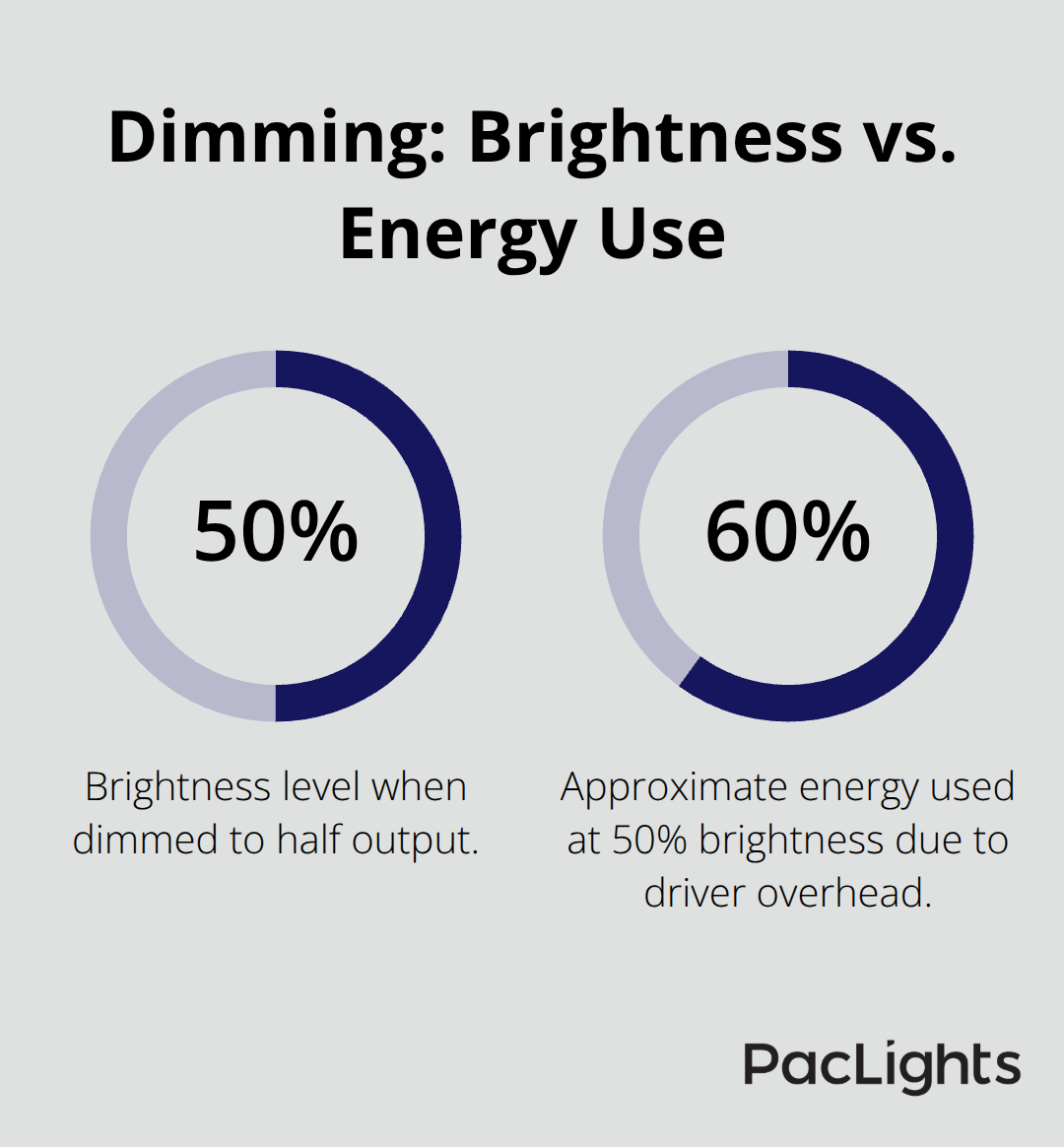
Quality matters in dimming systems-cheap 0-10V dimming drivers sometimes flicker at lower brightness levels, causing eye strain and occupant complaints, so specify drivers from established manufacturers with proven track records rather than selecting fixtures solely on price. A 4-foot wrap light dimmed to 50 percent brightness consumes roughly 60 percent of full-power energy, not 50 percent, because drivers and ballasts require baseline power regardless of output level. This means aggressive dimming in unoccupied corridors delivers outsized energy savings compared to moderate dimming scenarios, making sensor-controlled dimming strategies particularly effective for facilities with variable occupancy patterns.
Final Thoughts
Wrap light design fundamentals translate directly into measurable cost reductions and improved facility performance. A typical office with ten 4-foot corridors switching from 40-watt fluorescent fixtures to 20 to 25-watt LED wrap lights cuts baseline energy consumption by 50 percent immediately, while adding motion sensors reduces consumption another 30 to 50 percent. Over ten years, this combination saves 25,000 to 30,000 kilowatt-hours per corridor, translating to 3,000 to 4,500 dollars in electricity costs at average US commercial rates.
LED fixtures reach 50,000 hours of continuous operation compared to 20,000 hours for fluorescent equivalents, cutting maintenance labor and replacement inventory costs significantly. Networked lighting controls enable facility-wide coordination that responds to real-time occupancy patterns, preventing the energy waste from continuously lit empty corridors. Proper color temperature selection at 4000K to 5000K in work zones supports employee productivity and reduces eye fatigue, while quality dimming systems maintain occupant comfort without the flicker that plagues cheap drivers.
Measure your current corridor illumination and energy consumption to establish a baseline for comparison, then calculate your specific ROI using actual fixture costs, labor rates, and local electricity prices. Contact PacLights for a free lighting layout design and ROI assessment tailored to your facility’s dimensions, occupancy patterns, and budget constraints-we at PacLights provide customizable wrap light solutions with optional motion sensors, daylight controls, and networked lighting management systems that transform corridors into efficient, comfortable spaces.
Disclaimer: PacLights is not responsible for any actions taken based on the suggestions and information provided in this article, and readers should consult local building and electrical codes for proper guidance.