

Pendant light heat is one of the most overlooked factors in hospitality design. Most restaurant and hotel managers focus on aesthetics without considering how fixtures affect guest comfort and operating costs.
At PacLights, we’ve seen firsthand how poor thermal management in lighting can drive up HVAC expenses and create uncomfortable dining environments. The right cylinder pendant lights, however, can work with your climate control system instead of against it.
How Cylinder Pendants Dissipate Heat
Heat Generation and the Role of Aluminum Design
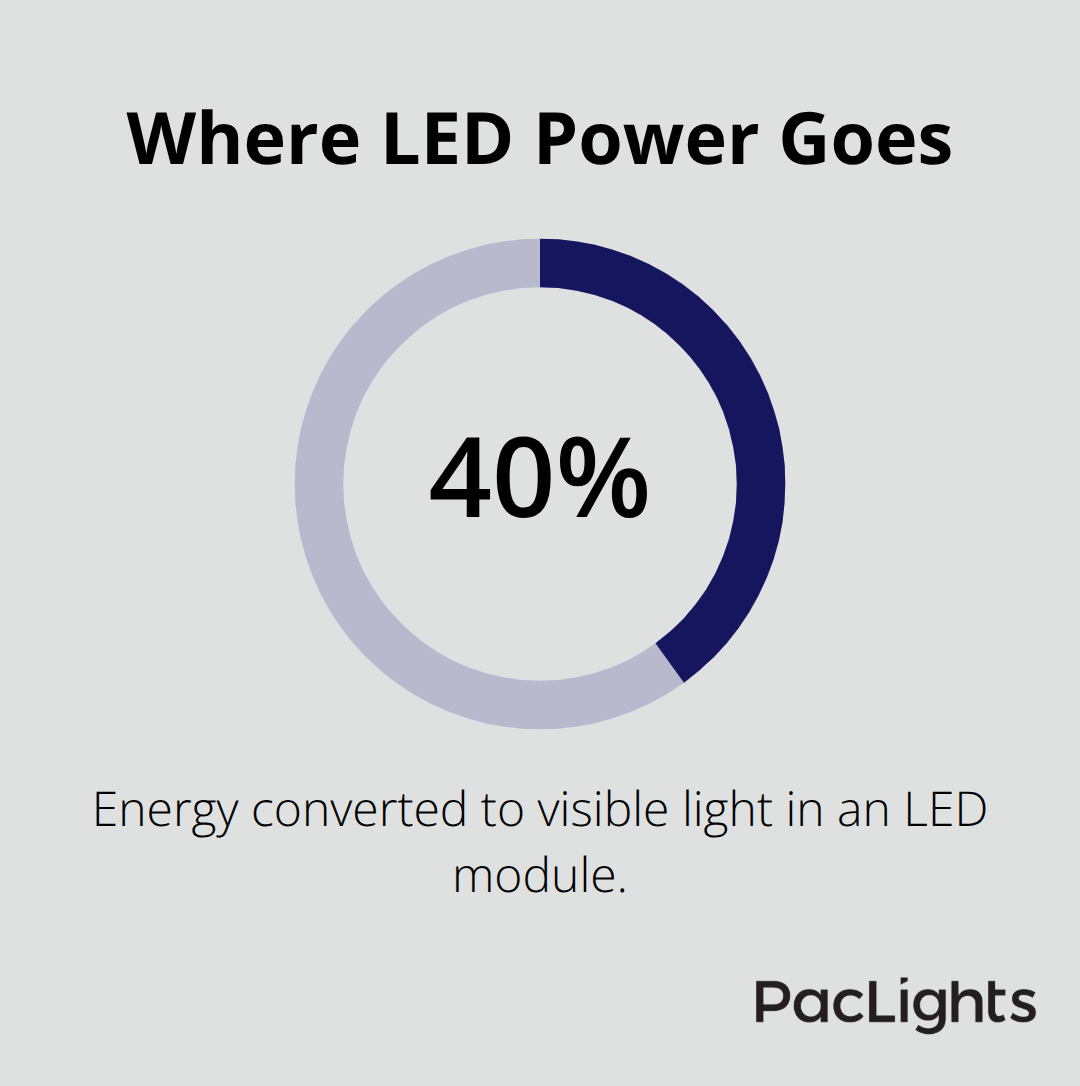
LED cylinder pendants generate far less heat than halogen or incandescent fixtures, but they still produce thermal output that must go somewhere. Inside an LED module, roughly 40% of energy converts to light while the remainder becomes heat concentrated at the junction. Without proper dissipation, this heat accumulates in the fixture, raising ambient temperatures around the pendant and forcing your HVAC system to work harder.
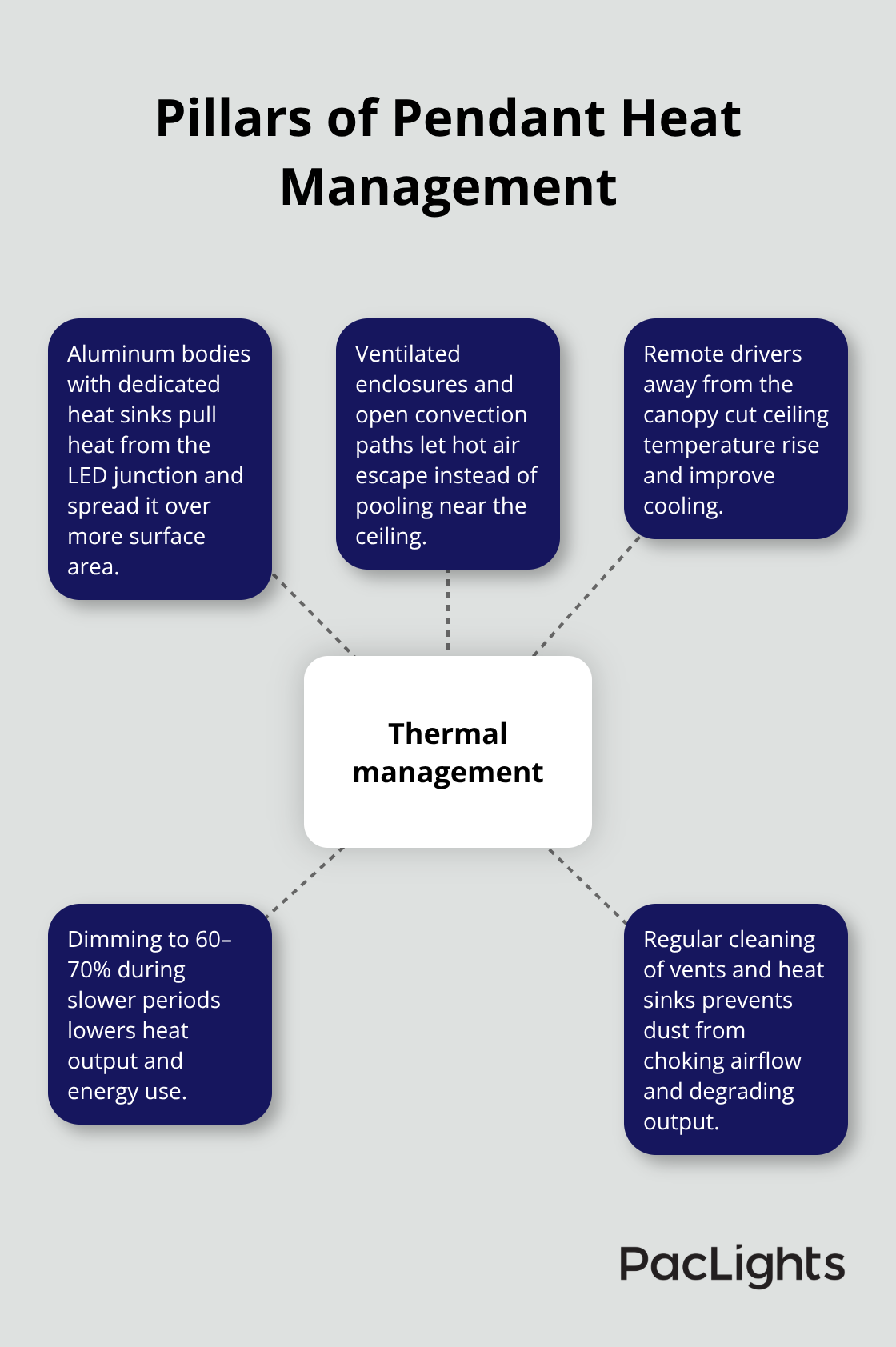
Aluminum-bodied cylinder pendants with dedicated heat sinks are non-negotiable for hospitality spaces. The aluminum conducts heat away from the LED junction and distributes it across a larger surface area, preventing thermal stress that degrades brightness and shortens fixture life. Fixtures with poor thermal design trap heat internally, creating a compounding problem: higher operating temperatures reduce LED luminous efficacy, meaning you lose brightness and must run fixtures at higher output to compensate, generating even more heat.
Ventilation and Enclosure Design
Ventilated enclosures and open pathways for convection make the difference between efficient cooling and wasted energy. Sealed or poorly ventilated designs are false economies that cost you money through higher cooling loads and premature replacement cycles.
Airflow around pendant clusters matters as much as the fixture itself. Position cylinder pendants to promote natural convection, keeping adequate canopy-to-ceiling clearance so hot air rises and dissipates rather than pooling around the fixture. In restaurant settings with 40 pendants running 12 hours daily, proper spacing and ventilation reduce total energy costs by roughly $8,208 annually compared to older halogen systems.
Driver Placement and Off-Peak Dimming
Place remote drivers away from the canopy whenever possible to improve overall cooling and reduce ceiling temperature rise. During off-peak hours, dimming to 60–70% lowers heat generation while maintaining ambiance, potentially adding $2,000 to $4,000 in annual savings for mid-size properties.
Maintenance and Operational Considerations
Dust buildup on vents and heat sinks severely impedes cooling and accelerates lumen depreciation. Clean fixtures quarterly in high-traffic areas and verify that nothing blocks airflow around the pendant. Avoid mounting cylinders directly above heat-producing equipment like grills or open kitchens, where thermal loads compound. Temperature stability directly affects color rendering and brightness consistency, so maintaining heat within manufacturer specifications protects both guest experience and long-term performance.
These thermal management fundamentals form the foundation for selecting fixtures that work efficiently in your space. The next step involves understanding how effective heat control translates into measurable benefits for your hospitality operation-from guest comfort to bottom-line savings.
Why Heat Management in Pendant Lights Transforms Guest Comfort and Operating Costs
Guest Comfort and Perceived Temperature
Effective heat dissipation in cylinder pendant lights directly shapes how guests perceive your dining space. When fixtures trap heat, the ambient temperature around tables rises noticeably, and guests feel warm even when your thermostat reads normal. This discomfort drives shorter visits, lower check averages, and negative reviews mentioning stuffy dining rooms. Hotels report that poorly managed pendant heat in guest rooms creates complaints about feeling too warm despite the AC running constantly. Fixtures with proper aluminum heat sinks and ventilated enclosures maintain cooler ceiling zones, letting your HVAC system work at normal capacity rather than fighting a constant thermal battle. The difference is measurable: a mid-size restaurant with 40 dimmable LED cylinder pendants running 12 hours daily saves roughly $8,208 annually in energy costs compared to older halogen systems, while simultaneously delivering a noticeably cooler, more comfortable environment. Efficient heat management delivers both comfort and savings simultaneously.
HVAC Efficiency and Energy Expenses
Your HVAC expenses reveal the true cost of poor pendant lighting design. When cylinder pendants operate without adequate heat dissipation, they force your cooling system to compensate for unnecessary thermal load, running longer cycles and consuming far more electricity than necessary. Dimming pendants to 60–70% during off-peak service hours adds $2,000 to $4,000 annually in additional savings for mid-size properties by reducing both heat output and electrical draw.
Food Quality and Presentation
Proper thermal management preserves food presentation and beverage quality in dining areas. Heat radiating from poorly designed fixtures warms plates, melts ice in glasses, and degrades the appearance of cold appetizers and desserts before they reach the table. Food that looks appealing drives higher perceived value and guest satisfaction; fixtures that maintain cool ceiling environments protect this critical first impression.
Long-Term Performance and Maintenance Costs
LED cylinder pendants with proper heat sinks maintain consistent color temperature and brightness over their lifespan, typically 25,000–50,000 hours, reducing the maintenance labor costs that total $3,000–$6,000 annually when you factor in frequent bulb changes and fixture repairs caused by thermal degradation. Installing dimmable LED cylinder pendants with proven thermal design typically pays back in 2.5–3 years, with ongoing annual benefits of $5,000–$10,000 for mid-size properties. Understanding these financial returns sets the stage for evaluating which fixtures and installation methods actually deliver on these promises in your specific space.
Selecting and Installing Cylinder Pendant Lights for Optimal Heat Control
Evaluating Fixture Specifications and Thermal Performance
Selecting a cylinder pendant that actually manages heat requires looking beyond wattage and lumens to thermal specifications that most hospitality managers ignore. Request the fixture’s ambient temperature rating (TA) from your supplier, which tells you the maximum safe operating temperature for that specific design. A fixture rated for TA 25°C performs differently than one rated for TA 40°C, especially in kitchens or spaces with high baseline ambient temperatures. Ask your supplier for the thermal resistance value (measured in °C/W), which indicates how effectively the fixture dissipates heat from the LED junction to the surrounding air. Lower thermal resistance means faster heat removal and longer fixture life.
Compare fixtures side by side on this metric rather than relying on marketing claims about efficiency. Aluminum construction alone means nothing without proper heat sink design, so verify that the fixture includes dedicated thermal pathways and adequate surface area for convection. Request independent test data showing lumen maintenance at 50,000 hours if the supplier claims extended lifespan; many fixtures degrade significantly before reaching stated ratings when thermal management fails. For a mid-size restaurant planning to install 40 pendants, the difference between a poorly designed fixture and one with proper thermal engineering translates to $5,000–$10,000 in annual savings over the fixture’s lifetime, making specification review worth your time.
Proper Installation Techniques for Maximum Airflow
Mount cylinder pendants with at least 18 inches of clearance between the canopy and ceiling to allow hot air to rise and escape rather than pooling around the fixture. In restaurants with open ceilings or suspended installations, this clearance is straightforward; in drop-ceiling environments, cut adequate access holes and verify that HVAC returns aren’t blocked by the fixture installation. Space pendants at least 4 to 6 feet apart in dining areas to prevent heat from multiple fixtures from compounding and creating hot zones above tables.
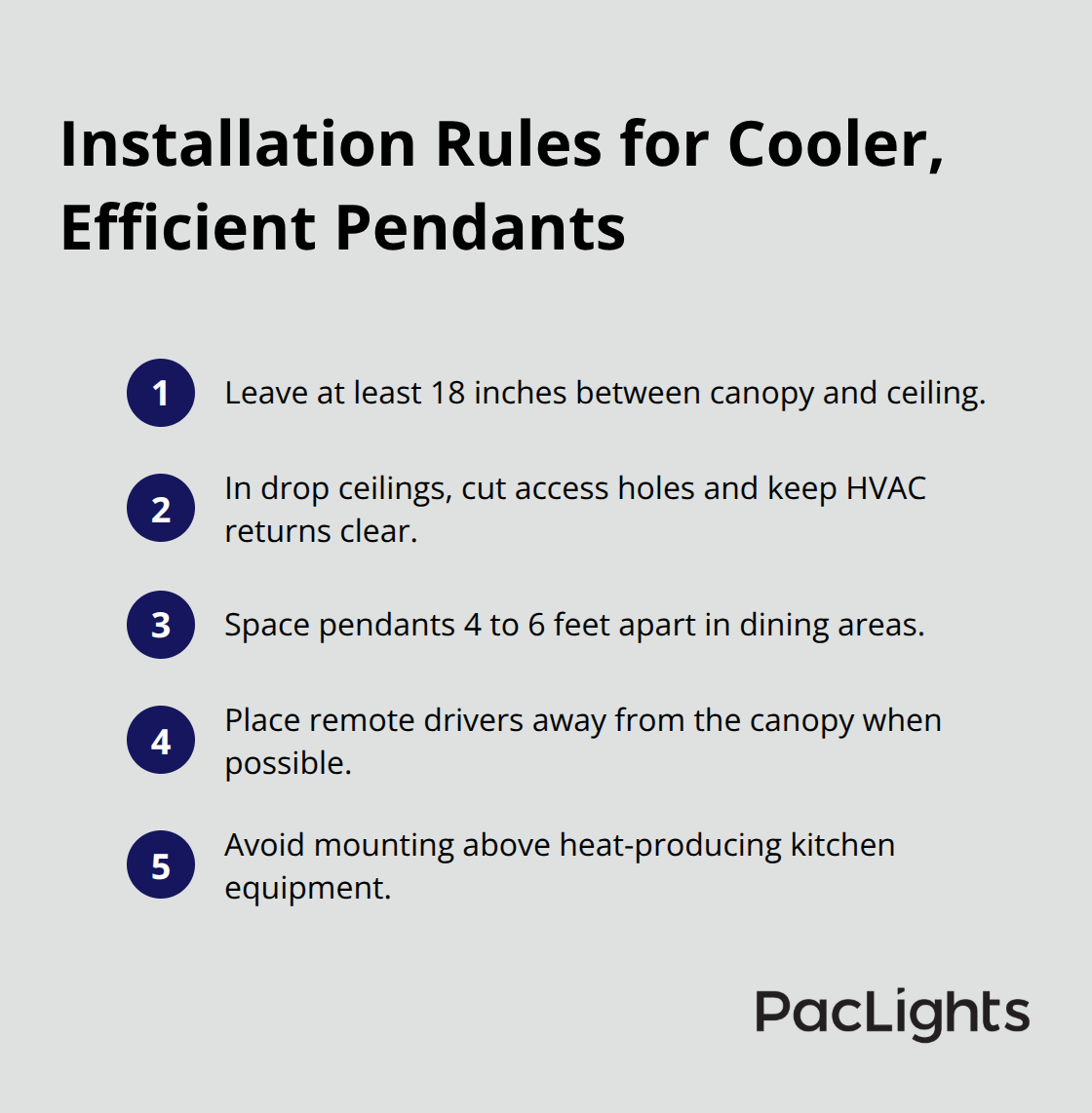
Position remote LED drivers away from the canopy whenever the fixture design allows, moving the heat source away from the ceiling zone where it affects guest comfort. Avoid mounting directly above kitchen equipment, grills, or open flames where thermal loads stack and damage the fixture prematurely. These installation decisions directly impact whether your fixture’s thermal design actually works in your space.
Maintenance Practices to Sustain Performance
Quarterly maintenance prevents heat buildup that shortens fixture life; dust and debris on vents and heat sinks reduce cooling efficiency by 20–30%, forcing the LED to operate hotter and dimmer. Use a soft brush or compressed air to clean vents, never solvents or abrasive materials that damage aluminum finishes. Verify that color temperature remains stable across the fixture’s brightness range; color shift signals thermal stress that degrades performance.
Request a free lighting layout design and ROI assessment before installation to confirm that your specific space geometry, ceiling height, and pendant spacing will deliver the thermal and comfort benefits you’re paying for. This assessment identifies potential thermal issues early and prevents costly mistakes in fixture selection or placement.
Final Thoughts
Pendant light heat management directly impacts your bottom line and guest experience. Fixtures with proper aluminum heat sinks, ventilated enclosures, and strategic placement reduce HVAC costs by thousands annually while keeping your dining rooms cooler and more comfortable. A mid-size restaurant investing in dimmable LED cylinder pendants with proven thermal design recovers its investment in 2.5 to 3 years, then continues saving $5,000 to $10,000 annually.
LED fixtures with proper thermal management maintain consistent color temperature and brightness across their 25,000 to 50,000-hour lifespan, eliminating frequent bulb replacements and repairs that drain maintenance budgets. Your HVAC system runs at normal capacity instead of fighting constant thermal load, extending equipment life and reducing emergency service calls. Guests perceive your space as more comfortable and well-maintained, which drives longer visits and better reviews.
Treat pendant light heat as a core design consideration from the start. Request thermal specifications from suppliers, verify aluminum construction with dedicated heat sinks, and plan installation with adequate clearance and spacing. Contact PacLights to explore cylinder pendant solutions tailored to your property’s thermal and comfort needs.
Disclaimer: PacLights is not responsible for any actions taken based on the suggestions and information provided in this article, and readers should consult local building and electrical codes for proper guidance.