

Poor lighting kills productivity and wastes money. At PacLights, we’ve seen firsthand how the right fixtures transform commercial spaces, and industrial cylinder pendant lights are a game-changer for facilities that demand durability and performance.
These lights deliver focused illumination exactly where you need it, cut energy costs, and handle the toughest environments without breaking down.
Why Cylinder Pendants Transform Industrial Spaces
Focused Light Delivers Measurable Results
Focused light matters more than you think in industrial settings. The Illuminating Engineering Society recommends approximately 30 foot-candles for general industrial work, and cylinder pendants deliver this uniformly across large areas without the dead zones that plague cheaper fixtures. In a 100-foot by 200-foot warehouse with 30-foot ceilings, you need roughly 60 to 80 pendants spaced about 25 feet apart to hit that target. Standard HID or fluorescent setups create shadows and dark corners that slow workers down and increase safety risks.
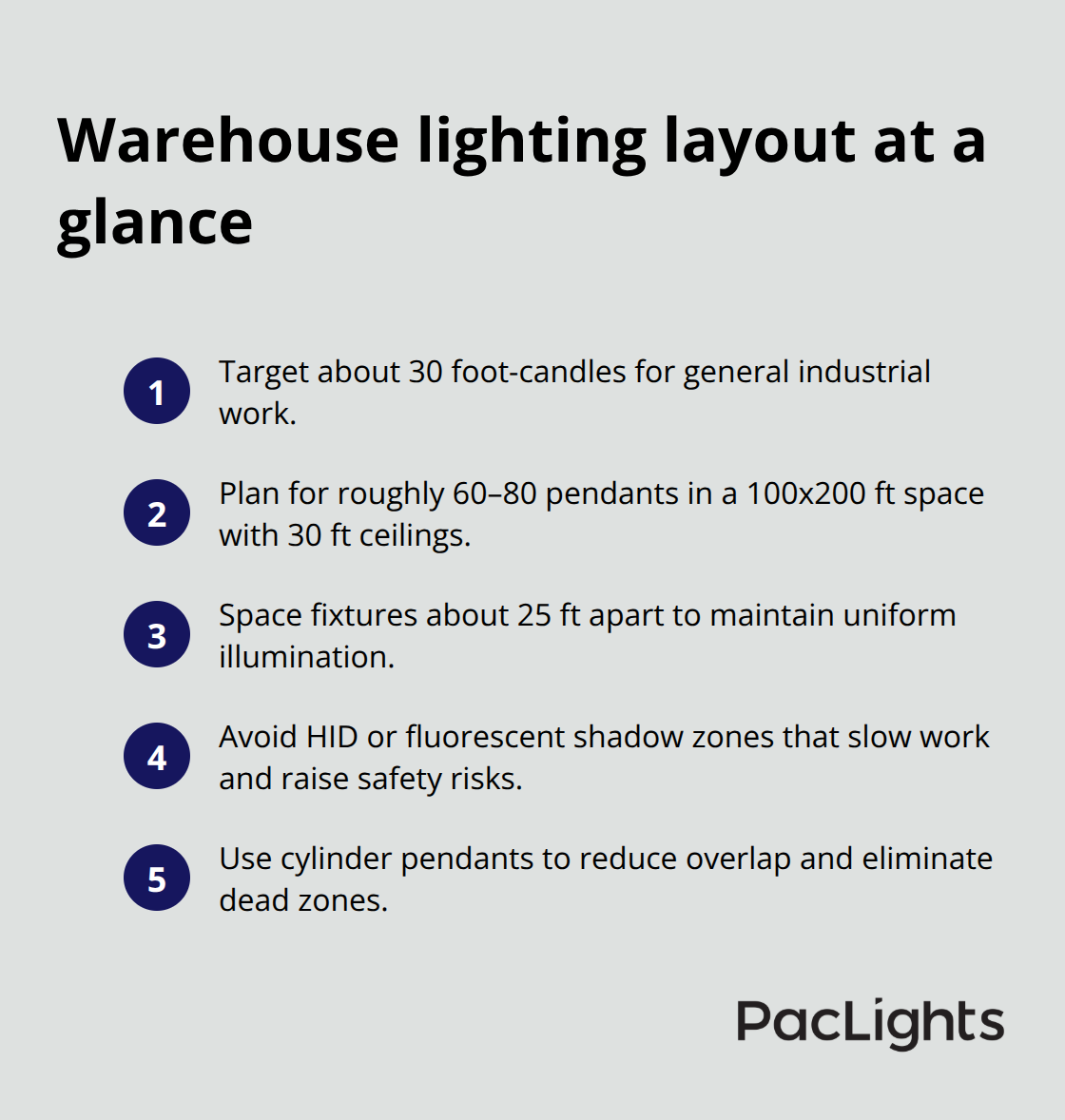
Cylinder pendants spread light multidirectionally, so you avoid the wasted overlap that comes from poorly spaced fixtures.
Color Temperature and Visual Clarity Matter
Manufacturing floors gain significant advantages when you choose pendants with a color rendering index above 80 and color temperatures between 4000K and 5000K. These specs improve visual clarity during assembly and inspection tasks where workers spot defects or align components. Without proper color temperature, workers experience eye strain and miss quality issues. That translates directly to rework costs and delays.
Industrial-Grade Materials Outlast Standard Fixtures
Durability in harsh environments separates cylinder pendants from retail lighting. Industrial spaces face vibration, temperature swings, dust, moisture, and chemical exposure that destroy standard fixtures within months. Cylinder pendants built with heavy-gauge steel or aluminum housings, powder-coated finishes rated to 10 to 15 years, and industrial-grade mounting kits handle this punishment. Stainless steel variants resist the most aggressive washdown conditions in food processing or automotive plants. When you specify fixtures, verify the housing gauge and coating thickness rather than relying on generic durability claims. Cheap finishes fail in 2 to 3 years; industrial-grade construction lasts a decade.
Energy Savings Compound Over Time
LED cylinder pendants cut your total cost of ownership dramatically. Over a 5 to 10-year horizon, they deliver over 50 percent energy savings versus fluorescent or HID options, and adding daylight harvesting or occupancy sensors pushes efficiency even higher. The long operational life of LED fixtures reduces maintenance downtime, which is critical for production continuity. Fewer replacement cycles and lower energy bills compound into significant savings. For large facilities running lighting 12 to 16 hours daily, switching to cylinder pendants pays for itself within 2 to 4 years through energy reduction alone. This financial advantage makes the upgrade decision straightforward for operations managers watching their bottom line.
Understanding these performance benefits positions you to evaluate specific applications where cylinder pendants excel.
What Specifications Actually Matter When Selecting Cylinder Pendants
Housing Materials and Coating Quality Determine Lifespan
The housing gauge and coating thickness separate fixtures that last five years from those that last fifteen. Industrial-grade fixtures use 18 to 20-gauge steel or heavy-duty aluminum with powder-coated finishes rated to 10 to 15 years, while cheaper alternatives fail in 2 to 3 years when exposed to vibration, temperature swings, and moisture. Stainless steel options handle the harshest washdown environments in food processing or automotive plants where standard finishes corrode rapidly. When evaluating fixtures, demand actual specifications rather than vague durability claims-ask your supplier for coating thickness in microns and housing gauge numbers.
Fixtures with reinforced mounting brackets rated for industrial loads and vibration-resistant suspension hardware outlast those with standard retail-grade components. These details matter because they directly impact your maintenance schedule and replacement frequency.
Temperature Ratings Prevent Thermal Failure
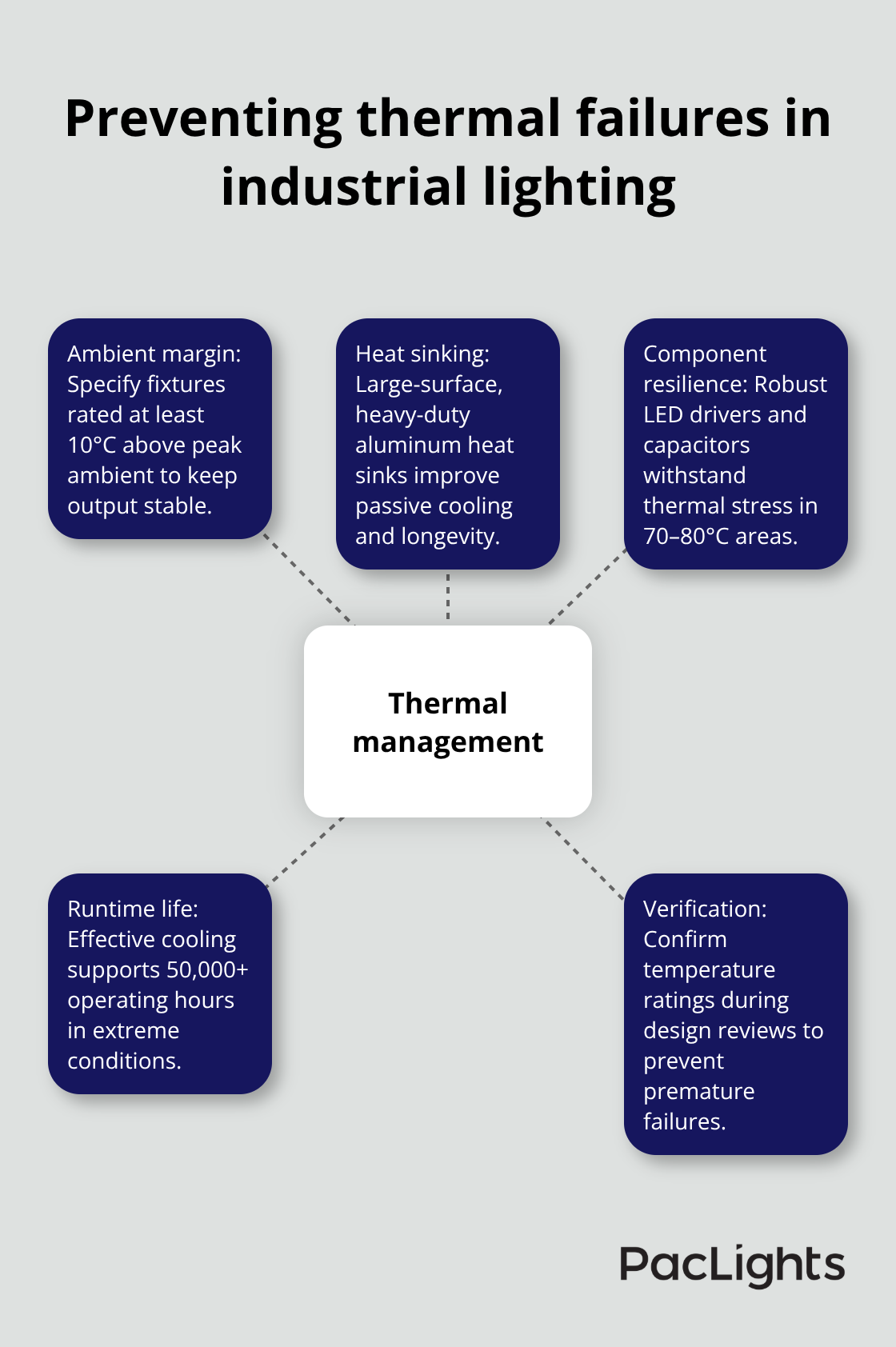
In high-temperature industrial environments reaching 70 to 80 degrees Celsius, standard LED drivers and capacitors fail due to thermal stress. Fixtures rated at least 10 degrees Celsius above peak ambient temperature maintain stable output where standard fixtures break down. Heavy-duty aluminum heat sinks with large surface areas maximize passive cooling and extend operational life to 50,000 hours or more in extreme conditions.
IP ratings protect against dust, moisture, and chemicals. Try IP65 to IP66 ratings minimum for industrial spaces, with IP69K for aggressive washdown areas. FKM gaskets and tempered glass resist chemical exposure and frequent cleaning without compromising light transmission.
Customization Options Fit Your Exact Layout
Adjustable suspension kits accommodate ceilings above 25 feet and sloped or vaulted surfaces common in warehouses and manufacturing facilities. Multiple diameter options (3 to 8 inches) tune light spread for your specific space dimensions and mounting height. LED wattage flexibility allows field adjustments to match actual illumination needs without replacing entire fixtures.
Color temperature selections between 4000K and 5000K suit different industrial tasks, with higher CRI above 80 improving visual clarity for assembly and inspection work. Dimming capabilities through Triac, electronic low-voltage, or 0-10V control enable energy optimization throughout the day.
Energy Performance and Long-Term Costs
LED technology cuts energy consumption by over 50 percent compared to fluorescent or HID alternatives, and adding daylight harvesting or occupancy sensors pushes efficiency even higher. Long-term cost of ownership strongly favors cylinder pendants due to extended service life reducing maintenance cycles, lower energy bills compounding annually, and modular designs allowing component upgrades rather than full fixture replacement.
Proper spacing at a ratio of 1.0 or less between fixture distance and mounting height prevents energy waste and uneven illumination. This calculation determines whether your installation achieves target foot-candles efficiently or wastes energy on overlapping coverage.
Planning Your Installation for Maximum Performance
Getting the fixture count and spacing right before purchase prevents costly mistakes and ensures you hit your illumination targets. The right specifications-combined with proper layout planning-transform your facility’s lighting performance and operational costs. With these technical foundations in place, the next step involves evaluating how different commercial settings demand different approaches to cylinder pendant selection and installation.
Where Cylinder Pendants Deliver the Biggest Impact
Warehouses: Uniform Light Across Massive Spaces
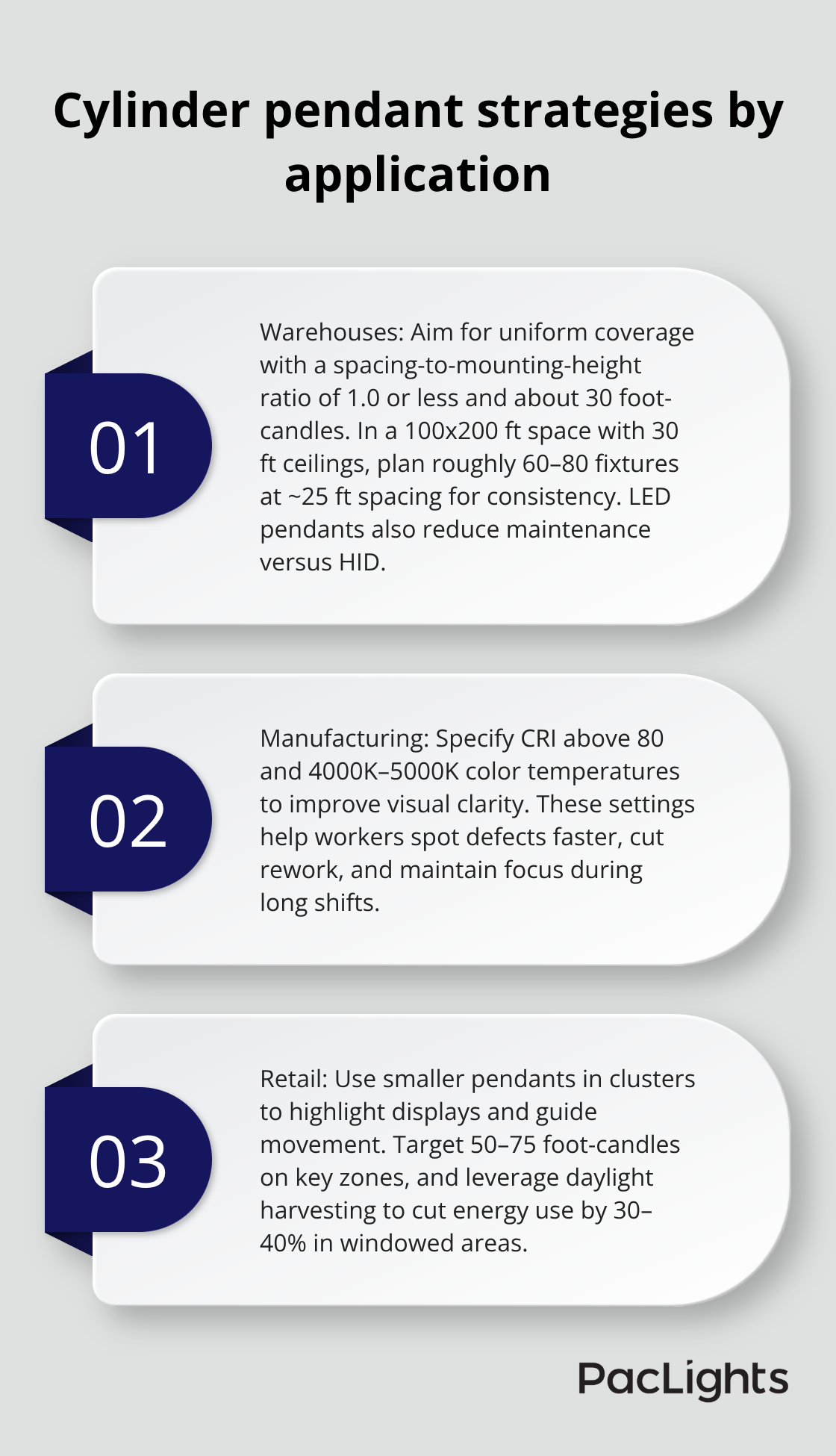
Warehouses demand uniform illumination across massive floor areas, and cylinder pendants excel where other fixtures fail. A typical 100-by-200-foot warehouse with 30-foot ceilings needs roughly 60 to 80 fixtures spaced approximately 25 feet apart to achieve the 30 foot-candles recommended by the Illuminating Engineering Society for general industrial work. The spacing-to-mounting-height ratio of 1.0 or less prevents the dead zones that plague HID systems, which concentrate light directly below fixtures and create dangerous shadows between them. In warehouses running 12 to 16 hours daily, switching from HID to LED cylinder pendants cuts energy costs by over 50 percent while eliminating the maintenance burden of frequent bulb replacements. High-bay spaces above 25 feet benefit most because cylinder pendants spread light multidirectionally, requiring fewer fixtures per square foot than traditional high-bay designs.
Manufacturing Floors: Clarity for Precision Work
Manufacturing floors gain significant advantages when you specify fixtures with color rendering index above 80 and color temperatures between 4000K and 5000K. These specifications improve visual clarity during assembly and inspection tasks where workers identify defects that cheaper lighting misses entirely. Workers spot quality issues faster, reduce rework costs, and maintain focus throughout extended shifts when proper color temperature eliminates eye strain.
Retail Showrooms: Strategic Clustering for Impact
Retail showrooms take a different approach, using smaller cylinder pendants in clusters to balance aesthetics with targeted illumination on product displays. Retailers try for 50 to 75 foot-candles on displays rather than the 30 foot-candles sufficient for warehouses, and daylight harvesting reduces energy consumption by 30 to 40 percent in windowed retail areas. Clustering pendants in reception areas and around key product zones creates visual focal points that guide customer movement while defining distinct spaces within open-plan layouts.
Offices: Layered Lighting for Comfort and Productivity
Office and administrative spaces benefit from cylinder pendants layered with both downlighting and uplighting options to reduce glare on computer screens while maintaining ambient visibility that prevents eye strain during extended work periods. Proper fixture placement at the right spacing ratio (1.0 or less between fixture distance and mounting height) creates consistent illumination across desks and work surfaces without the hotspots and shadows that disrupt focus and productivity.
Final Thoughts
Industrial cylinder pendant lights deliver three measurable advantages that justify the investment in any commercial facility. They provide uniform illumination across large spaces without the dead zones that plague cheaper alternatives, directly improving worker safety and productivity. Their industrial-grade construction withstands harsh environments for 10 to 15 years, eliminating the constant replacement cycles that drain maintenance budgets, while LED technology cuts energy costs by over 50 percent compared to fluorescent or HID systems.
Selecting the right fixture requires three concrete steps: measure your space dimensions, ceiling height, and peak ambient temperature to determine the fixture count and spacing needed; verify housing gauge, coating thickness in microns, and temperature ratings rather than accepting vague durability claims; and specify color temperature and CRI based on your work tasks (4000K to 5000K with CRI above 80 for manufacturing floors, lower foot-candles for warehouses, and higher foot-candles for retail displays). The upgrade path forward starts with a lighting audit to measure current illumination and identify exact fixture requirements. We at PacLights provide free lighting layout designs and ROI assessments to help you understand the financial impact before committing to any purchase, and our team works with you to select fixtures tailored to your specific environment.
Disclaimer: PacLights is not responsible for any actions taken based on the suggestions and information provided in this article, and readers should consult local building and electrical codes for proper guidance.