

Your office light color directly impacts how your brain functions throughout the workday. Research shows that different wavelengths trigger specific neurochemical responses that affect focus, creativity, and energy levels.
We at PacLights have seen companies increase productivity by up to 23% simply by optimizing their lighting systems. The right lighting strategy can transform your workplace from a source of fatigue into an environment that naturally boosts performance and employee satisfaction.
How Different Light Wavelengths Affect Brain Chemistry
Light wavelengths between 380 and 700 nanometers trigger distinct biochemical cascades in your brain that directly affect work performance. Blue light at 480 nanometers stimulates melanopsin receptors in your retina, which send signals to the suprachiasmatic nucleus. This process suppresses melatonin production by 50% within 15 minutes (according to Harvard Medical School research). The result shows increased cortisol and norepinephrine levels that sharpen focus and reaction time by up to 10%.
Morning Light Sets Your Performance Clock
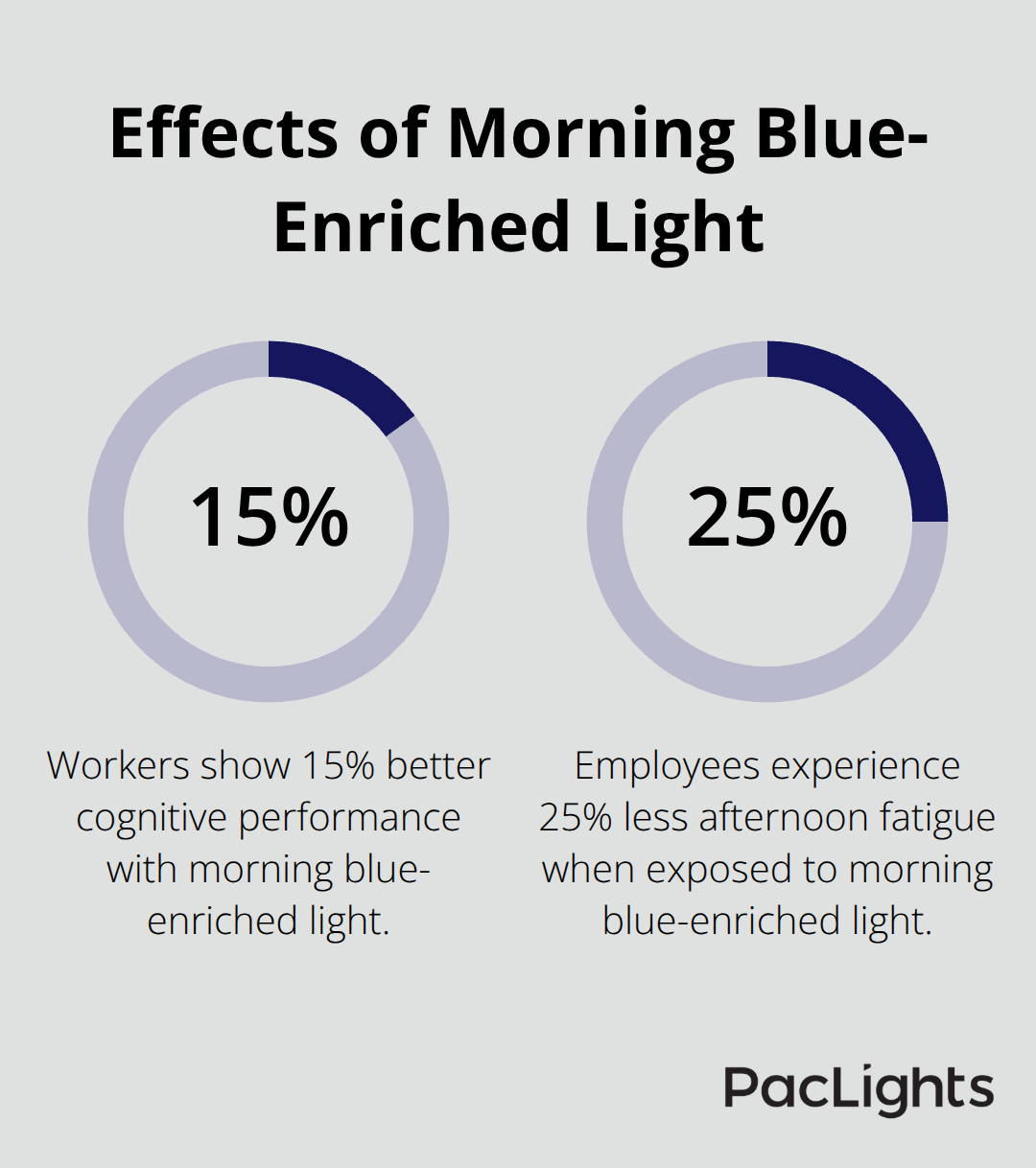
Your circadian system responds most strongly to light exposure between 6 AM and 9 AM. Bright white light at 5000K during these hours can advance your sleep-wake cycle by 30 minutes per day, based on studies from the Lighting Research Center at Rensselaer Polytechnic Institute. Workers exposed to morning blue-enriched light show 15% better cognitive performance and 25% less afternoon fatigue compared to those under standard fluorescent lights. The key lies in timing exposure within two hours of your natural wake time.
Afternoon Light Prevents the 3 PM Crash
Red light wavelengths between 630-700 nanometers have minimal impact on melatonin suppression but maintain alertness through different pathways. Research from the University of Toronto found that workers under tunable LED systems that shift from cool morning light to warmer afternoon tones maintain 18% higher productivity after 2 PM. The optimal transition starts at 1 PM and gradually warms color temperature from 5000K to 3000K by 4 PM (preventing the typical post-lunch energy dip that costs companies an average of 2.5 hours of productive work daily).
These neurochemical responses create the foundation for strategic workplace lighting design. Different work activities require specific light colors to maximize brain function and performance outcomes.
Which Light Colors Work Best for Different Tasks
Cool Blue and White Light Maximize Focus
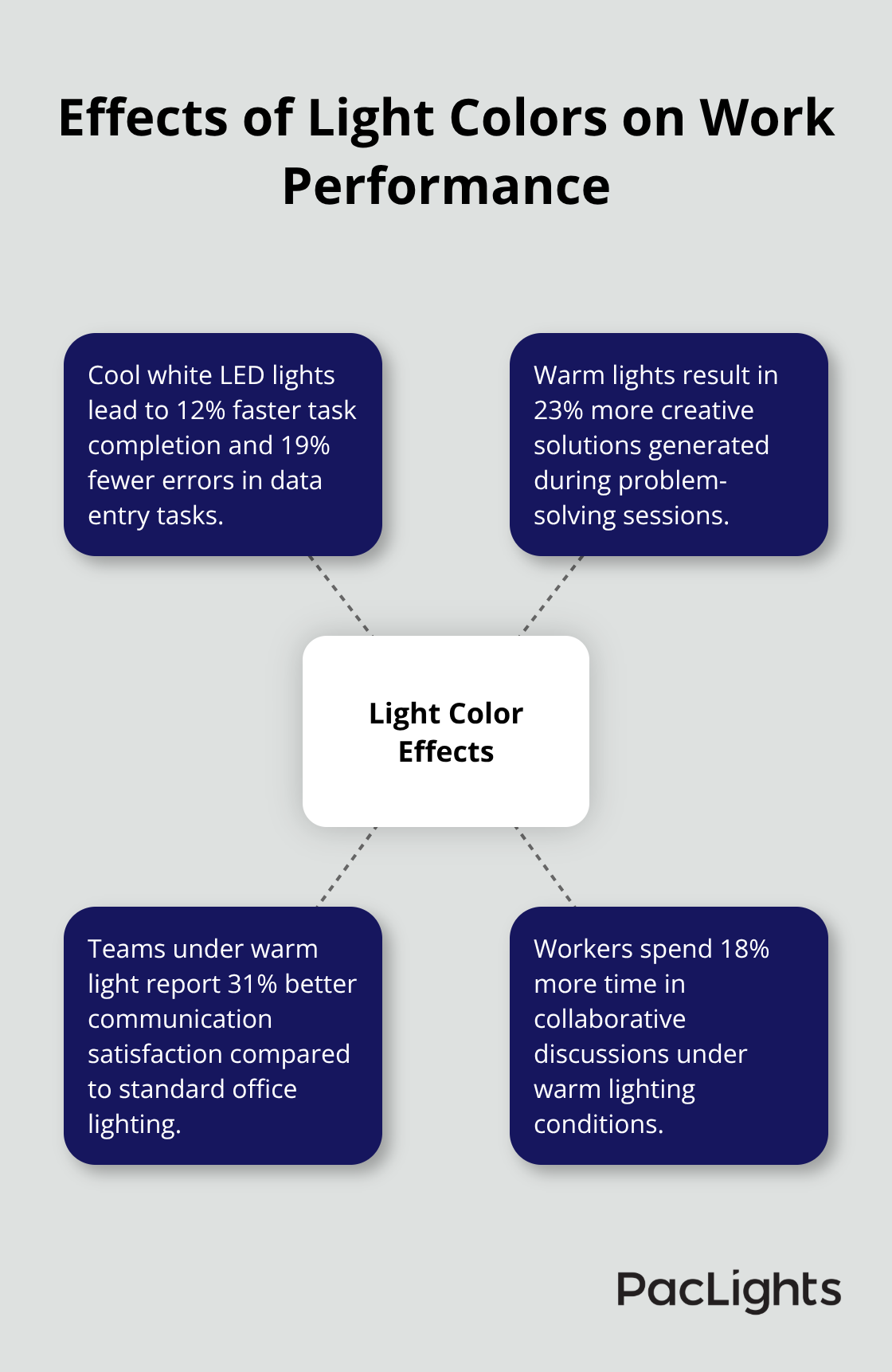
Cool blue and white light at 5000K to 6500K creates the optimal environment for analytical work and detail-oriented tasks. Studies from the Lighting Research Center show that workers exposed to cool white LED lights complete data entry tasks 12% faster and make 19% fewer errors compared to those under warm fluorescent lights. The short wavelengths in blue-enriched light increase dopamine production, which sharpens attention span and improves memory function.
Workers need 500-750 lux intensity for computer work and document review, with color temperatures above 4000K during peak focus hours between 9 AM and 2 PM. This combination activates the neural pathways that support sustained concentration and reduces mental fatigue during complex problem-solving tasks.
Warm Light Enhances Creative Problem Solving
Warm light between 2700K and 3500K activates different neural pathways that support divergent thought and collaborative work. Research from the University of British Columbia found that people who work under warm lights generate 23% more creative solutions and show increased openness to new ideas. The longer red wavelengths reduce cortisol levels and promote relaxation, which allows for more flexible thought patterns.
Conference rooms and brainstorming spaces perform best with adjustable lights that can shift to 3000K during creative sessions. Teams that work under warm light also report 31% better communication satisfaction and spend 18% more time in collaborative discussions (compared to standard office fluorescent systems).
Natural Light Remains the Gold Standard
Natural daylight provides the full spectrum of wavelengths that artificial lights struggle to replicate completely. Workers with access to natural light sleep an average of 46 minutes longer per night and report 15% higher energy levels throughout the day, according to Northwestern Medicine research. Offices with windows that face east or south see 6% lower absenteeism rates and 2% higher job satisfaction scores.
The dynamic color temperature changes of natural light throughout the day help maintain healthy circadian rhythms better than any static artificial system. This natural variation creates the foundation for smart LED technology that can mimic these beneficial patterns throughout your workspace.
How Do You Install Smart Color-Changing Office Lights
Modern color-tunable LED systems require strategic planning that goes far beyond simple fixture replacement. The most effective installations use networked controls that adjust color temperature automatically based on time of day and specific work zones. Philips Dynalite systems allow you to program different scenes for morning focus periods at 6000K, afternoon collaboration at 3500K, and evening wind-down at 2700K. These systems connect through wireless protocols like Zigbee or WiFi, which enables central control through smartphone apps or management systems.
Zone-Based Programming Maximizes Performance Benefits
Different office areas need distinct strategies to optimize their specific functions. Conference rooms should shift to 3000K warm light during brainstorming sessions but maintain 5000K cool light for presentations and data review. Open office spaces benefit from gradual color temperature transitions throughout the day (starting at 5500K at 8 AM and gradually warming to 3200K by 5 PM). Private offices can use individual sensors that adjust based on occupancy and task type. Lutron EcoSystem controllers track usage patterns and automatically optimize settings, which reduces energy consumption by 35% while maintaining performance benefits.
Smart Systems Pay for Themselves Within 18 Months
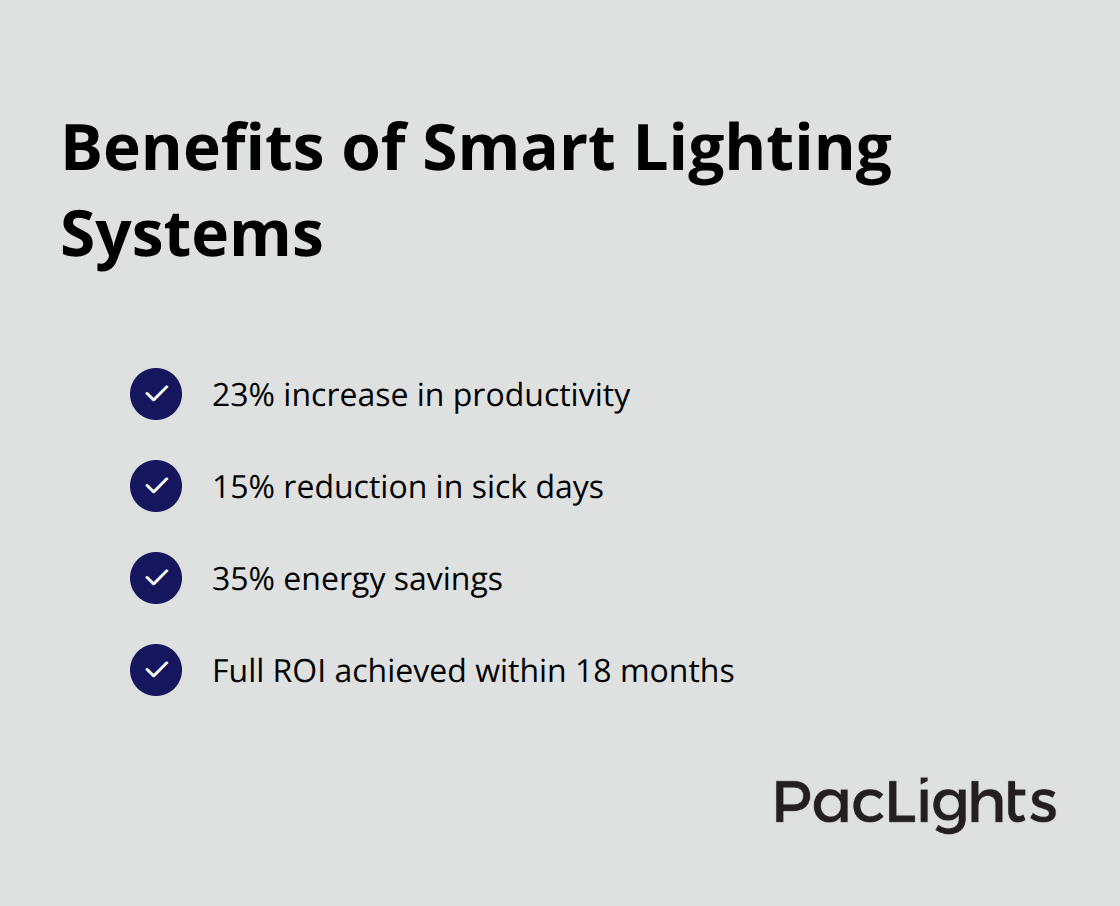
The average cost for color-tunable LED systems ranges from $12 to $18 per square foot, compared to $4 to $6 for standard LED retrofits. However, companies that implement smart systems see 23% productivity gains and 15% reduction in sick days (according to the International WELL Building Institute). Energy savings alone typically recover 40% of installation costs within the first year. When you factor in reduced absenteeism and increased output, most businesses achieve full ROI within 18 months. The key lies in choosing systems with occupancy sensors and daylight harvesting capabilities that maximize both energy efficiency and human performance benefits.
Final Thoughts
The research proves that office light color controls brain chemistry and workplace performance directly. Blue-enriched light at 5000K increases focus by 12% and reduces errors by 19%. Warm light at 3000K boosts creative output by 23% and improves team collaboration. Natural light remains superior, providing 46 minutes more sleep and 15% higher energy levels.
Start with an assessment of your current zones and identify areas where specific tasks require different color temperatures. Install programmable LED systems that automatically shift from cool morning light to warm afternoon tones. Focus on conference rooms first, where collaboration benefits show immediate results.
The long-term impact extends beyond productivity gains (companies with optimized systems report 15% fewer sick days and 6% lower absenteeism rates). Employee satisfaction scores increase by 2% while energy costs drop by 35% through smart controls. We at PacLights provide comprehensive LED retrofit solutions with advanced controls and daylight sensors that maximize both performance and efficiency.
Disclaimer: PacLights is not responsible for any actions taken based on the suggestions and information provided in this article, and readers should consult local building and electrical codes for proper guidance.