

At PacLights, we understand the critical role of proper illumination in industrial and commercial settings. High bay spaces present unique lighting challenges that require careful planning and execution.
Designing an effective high bay lighting layout involves considering factors like ceiling height, light distribution, and energy efficiency. Our guide will walk you through the process, including how to use a high bay lighting layout tool for optimal results.
High Bay Lighting Requirements: Essential Factors for Effective Illumination
Defining High Bay Spaces and Their Lighting Needs
High bay lighting applies to spaces with ceilings 20 feet or higher. These areas, common in warehouses, manufacturing facilities, and large retail stores, demand powerful illumination to ensure safety, productivity, and efficiency.
Illumination Levels for Various Applications
The Illuminating Engineering Society (IES) suggests specific foot-candle recommendations for different high bay environments:

To meet these standards, select the appropriate lumen output for your fixtures. For ceilings between 20-30 feet, use fixtures producing 20,000-29,000 lumens. Spaces with ceilings over 40 feet may need fixtures generating 40,000+ lumens for adequate illumination.
Key Factors in High Bay Lighting Design
Several elements influence high bay lighting design:
- Ceiling Height: This directly impacts the required lumen output and fixture spacing. For optimal coverage, space fixtures mounted at 20 feet approximately 20 feet apart.
- Light Distribution and Beam Angles: Round high bay lights with a 120-degree beam angle suit large open spaces, while linear fixtures work better for aisle configurations in warehouses or retail environments.
- Color Temperature: Most high bay applications benefit from cooler color temperatures (around 4000K) to enhance alertness and visibility. However, consider the specific tasks and desired atmosphere of your space when selecting color temperature.
Energy Efficiency and Safety Considerations
Energy efficiency stands as a top priority in high bay lighting design. LED high bay lights can cut electricity costs by up to 70% compared to traditional lighting solutions. Many manufacturers (including PacLights) offer LED options that save energy and provide superior illumination quality.

Safety remains paramount in industrial and commercial settings. Proper lighting significantly reduces workplace incidents by improving visibility. The National Institute for Occupational Safety and Health reports that improved lighting can decrease errors by 30-60% in industrial settings.
For environments with specific safety requirements, select fixtures with appropriate ratings:
- Food processing areas: NSF-certified lighting
- Dusty or moist environments: IP65-rated fixtures
The next chapter will explore the step-by-step process of designing an effective high bay lighting layout, incorporating these essential factors to create an optimal illumination solution for your space.
Key Factors in High Bay Lighting Design
Ceiling Height and Fixture Selection
Ceiling height forms the foundation of high bay lighting design. It impacts fixture types and mounting methods. For ceilings 20-30 feet high, fixtures producing 20,000-29,000 lumens work best. Ceilings over 40 feet require fixtures generating 40,000+ lumens for proper illumination.
Mounting options vary with ceiling structure and height. Pendant mounting suits most applications, while surface mounting fits lower ceilings. For extremely high ceilings or areas with limited access, lowering devices facilitate easier maintenance.
Light Distribution and Beam Angles
Your space layout dictates the required light distribution pattern. Large, open areas benefit from round high bay lights with a 120-degree beam angle, providing wide, even coverage. Spaces with aisles or specific work zones often need linear fixtures or lights with narrower beam angles (60-90 degrees).
Consider obstructions like shelving or machinery when planning your layout. These can create shadows and dark spots if overlooked in your design.
Color Quality and Visual Comfort
Color temperature and color rendering index (CRI) significantly affect visual comfort and task performance. Most industrial applications benefit from cooler color temperatures (4000K-5000K). These enhance alertness and visibility, which are essential for safety and productivity.
CRI matters equally, especially where color accuracy is vital. A CRI of 80 or above suits most high bay applications. However, areas requiring color matching (such as quality control stations) might need fixtures with a CRI of 90 or higher.
Glare reduction also contributes to visual comfort. Select fixtures with well-designed optics that minimize direct glare. In some cases, external reflectors or diffusers can help distribute light more evenly and reduce eye strain.
Energy Efficiency and Cost Considerations
Energy efficiency extends beyond lower electricity bills; it encompasses long-term sustainability and reduced maintenance costs. LED high bay lights can reduce electricity costs by up to 70% compared to traditional lighting solutions. When choosing fixtures, examine the lumens per watt (efficacy) rating. A higher number indicates greater efficiency.
Evaluate the total cost of ownership, not just the initial purchase price. Factor in energy savings, expected lifespan, and maintenance requirements. While LED fixtures might cost more upfront, they often yield significant savings over time.
Smart controls can further boost energy efficiency. Occupancy sensors, daylight harvesting systems, and networked lighting controls can dramatically cut energy consumption by ensuring lights operate only when and where needed.
The next section will guide you through the step-by-step process of designing your layout, incorporating these key factors to create an optimal high bay lighting solution.
How to Create Your High Bay Lighting Layout
Assess Your Space
Start with a thorough measurement of your area. Note the ceiling height, room dimensions, and any obstructions (like shelving or machinery). Use a light meter to measure current light levels and identify areas that need improvement. This data will form the foundation of your lighting plan.
Determine Light Levels
Calculate the required foot-candles based on your space’s function. General warehousing typically needs 10-20 foot-candles, while detailed assembly work requires 50-100 foot-candles. Use this formula to determine total lumens needed:
Total lumens = Area (sq ft) x Required foot-candles ÷ Light Loss Factor
The Light Loss Factor for LED high bays typically ranges from 0.85 to 0.9.
Select Appropriate Fixtures
Choose fixtures based on your calculated lumen requirements and ceiling height. For 20-30 foot ceilings, select fixtures that produce 20,000-29,000 lumens. Higher ceilings (over 40 feet) may need fixtures that generate 40,000+ lumens.
Consider beam angle and distribution pattern. Round high bays with 120-degree beam angles suit open spaces, while linear fixtures work better for aisles. Factor in color temperature and CRI based on your specific needs.
Optimize Fixture Placement
Apply the “one and a half times the mounting height” rule for initial placement. For example, if your fixtures are mounted at 30 feet, space them about 45 feet apart. Adjust based on specific room characteristics and light distribution patterns.
Use lighting design software for precise calculations. These tools account for room geometry, fixture characteristics, and surface reflectivity to generate detailed photometric reports. Many lighting companies offer free layout design services to optimize your system.
Incorporate Controls
Integrate smart controls to maximize energy savings. Motion sensors can reduce energy use in low-traffic areas by up to 30%. Daylight harvesting systems adjust artificial light based on available natural light, potentially cutting energy costs by an additional 20-60%.
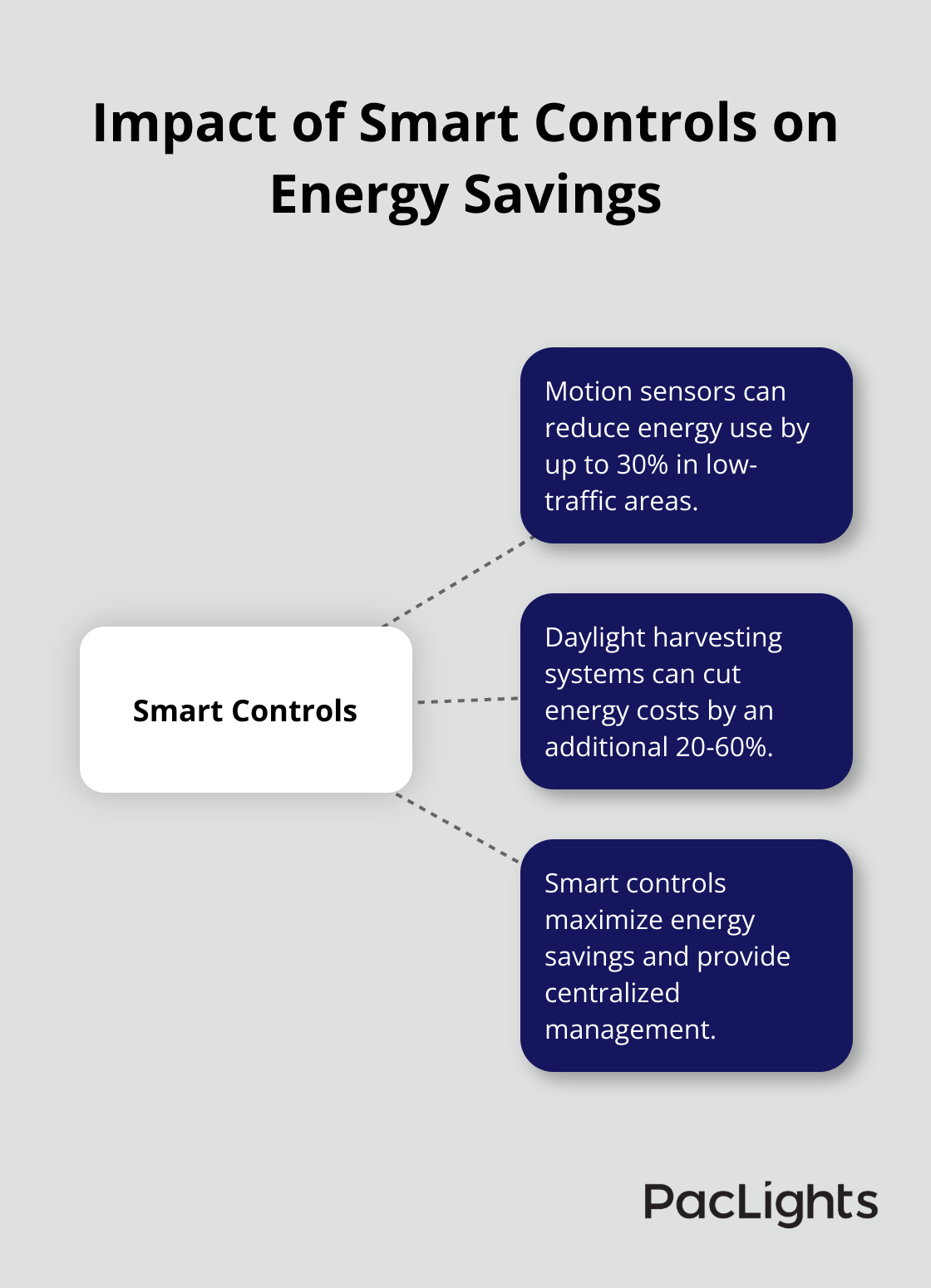
Consider networked lighting controls for centralized management and data collection. These systems allow for granular control and provide insights into energy usage patterns.
Final Thoughts
Effective high bay lighting design requires careful consideration of multiple factors. Ceiling height, fixture selection, light distribution, and energy efficiency all play vital roles in creating optimal illumination. Professional lighting layout services provide expertise to ensure your design meets industry standards and maximizes energy efficiency.
A well-designed high bay lighting system offers significant benefits for businesses. It reduces energy costs, improves worker productivity, and enhances overall safety. PacLights offers free lighting layout designs to help you make informed decisions about your lighting needs.
Lighting technology continues to evolve, offering new opportunities for improved efficiency and performance. Regular reviews and updates of your lighting system help you stay ahead of industry trends. Our high bay lighting layout tool can assist you in creating a lighting solution that truly shines in your industrial or commercial space.
Disclaimer: PacLights is not responsible for any actions taken based on the suggestions and information provided in this article, and readers should consult local building and electrical codes for proper guidance.