

Warehouse lighting energy savings aren’t just about switching bulbs-they’re about transforming your bottom line. Most facilities waste thousands annually on outdated lighting systems that consume far more power than necessary.
At PacLights, we’ve seen warehouses cut energy costs by 50% or more through strategic LED retrofits. This guide walks you through the real numbers, practical steps, and timeline for upgrading your facility.
Why Your Warehouse Lighting Costs More Than You Think
The Energy Waste Problem in Traditional Systems
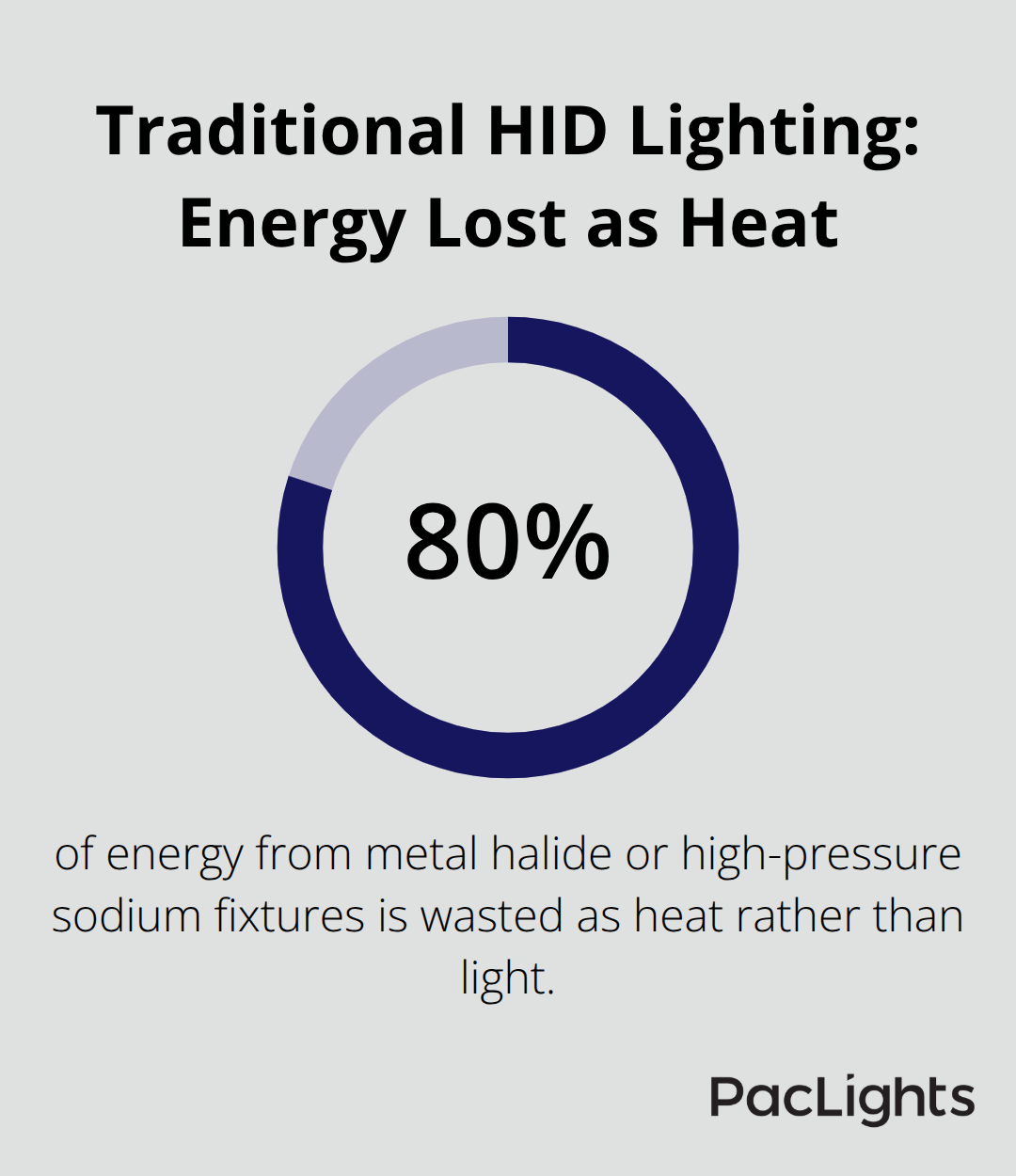
Traditional warehouse lighting systems consume staggering amounts of energy. Most facilities still operate with high-intensity discharge lamps like metal halide or high-pressure sodium fixtures, which waste approximately 80% of their energy output as heat rather than light. A typical 50,000-square-foot warehouse using conventional high bays spends $15,000 to $25,000 annually on lighting electricity alone, according to data from the U.S. Department of Energy.
The problem compounds when you factor in maintenance costs. Metal halide bulbs require replacement every 10,000 to 20,000 hours of operation, meaning warehouses change them multiple times per year. Each replacement involves labor, equipment rental for lifts, and operational disruption that affects your workflow.
Over-Illumination and Uneven Light Distribution
Aging fixtures often create hot spots and dark zones, forcing facility managers to over-illuminate certain areas to meet industry standards of 30 to 50 foot-candles for general warehouse work. This over-illumination directly translates to wasted energy and higher bills. Workers in poorly lit zones require additional fixtures, which multiplies your electricity consumption across the entire facility.
Hidden Costs Beyond Your Electric Bill
The financial drain extends far beyond what appears on your electricity invoice. Warehouses with outdated lighting experience higher cooling costs because traditional fixtures generate excessive heat, forcing HVAC systems to work harder during warm months. Worker productivity also suffers under poor lighting quality-research from the Lighting Research Center shows that inadequate or flickering illumination increases error rates and slows task completion in industrial settings.
Insurance premiums sometimes increase when facilities fail to meet modern safety illumination codes. Additionally, the thermal stress from continuous high-wattage operation shortens the lifespan of surrounding equipment and infrastructure, creating a cascade of unexpected replacement expenses.
The Path Forward with Advanced Lighting Controls
LED fixtures with advanced controls like motion sensors and daylight harvesting eliminate these cascading costs while delivering superior light quality and consistency across your warehouse floor. These systems adapt to actual occupancy and natural light conditions, reducing energy waste throughout the day. Understanding these hidden expenses makes the case for upgrading clear-but the real question becomes how much you can actually save with modern LED technology.
How Much Can You Actually Save with LED Retrofits
The Energy Efficiency Advantage
LED fixtures eliminate the energy waste inherent in traditional systems, delivering 75% to 80% energy reductions compared to metal halide or high-pressure sodium alternatives. This isn’t marginal improvement-it’s a fundamental shift in how your warehouse consumes electricity. A 50,000-square-foot facility spending $20,000 annually on traditional high-bay lighting typically cuts that bill to $4,000 to $5,000 after switching to LED, according to the U.S. Department of Energy. The difference compounds immediately because LEDs produce usable light instead of wasted heat. Your HVAC system runs less frequently, especially during summer months when cooling costs spike.
Maintenance Savings That Add Up Fast
Warehouses stop replacing bulbs constantly once they switch to LED technology. LED fixtures last 50,000 to 100,000 hours compared to 10,000 to 20,000 hours for metal halide bulbs. Your maintenance crew spends far less time on lifts, purchasing replacements, and managing inventory disruptions. These labor reductions represent real money saved beyond what your electricity meter shows.
Advanced Controls Push Savings Higher
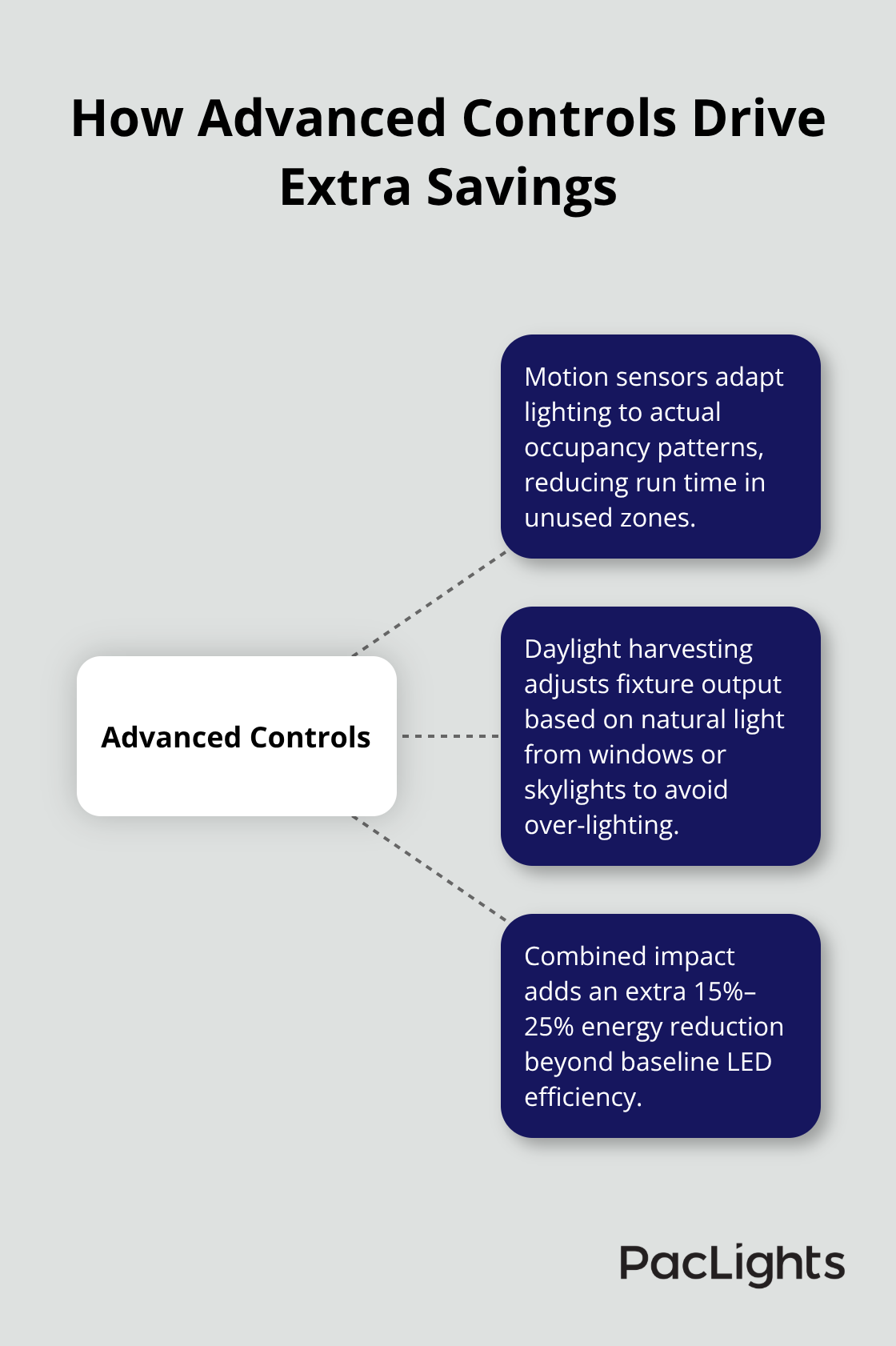
Motion sensors and daylight harvesting features adapt to actual occupancy patterns and natural light conditions, pushing energy savings even higher. Motion sensors deactivate lights in unused zones, while daylight harvesting reduces fixture output when natural light enters through windows or skylights. A warehouse with these controls installed sees additional 15% to 25% energy reductions beyond baseline LED efficiency.
ROI Timeline and Payback Reality
Your electricity savings alone typically cover the retrofit investment within 3 to 5 years, but when you factor in eliminated maintenance labor and reduced HVAC strain, many warehouses see full ROI in 2 to 3 years. A facility spending $20,000 annually on traditional lighting saves $15,000 to $16,000 per year after an LED retrofit. If the retrofit costs $40,000 to $50,000, you recover that investment in roughly 3 years, then pocket pure savings for the remaining 15 to 20 years of LED fixture life. Some warehouses with high cooling costs or aggressive lighting schedules hit payback in under 24 months.
Calculating Your Specific Numbers
The calculation becomes straightforward: identify your current annual lighting and cooling costs, apply realistic energy reduction percentages, then divide your retrofit investment by annual savings. This approach reveals whether your facility sits in the 2-year payback category or the 5-year range. The next step involves assessing your current lighting setup to understand exactly what you’re working with and what fixtures will perform best in your specific warehouse environment.
Implementing LED Retrofits in Your Warehouse
Assess Your Current Lighting Setup
Start by documenting exactly what you have installed right now. Walk your warehouse floor with a light meter and note fixture types, wattages, mounting heights, and spacing patterns. Most facilities operate a mix of outdated systems-some metal halide, some high-pressure sodium, possibly some older fluorescent-installed at different times without cohesive planning. The U.S. Department of Energy recommends measuring illumination levels at floor level across multiple zones to identify over-lit and under-lit areas. This data becomes your baseline for calculating actual energy reductions and determines which fixture types will work best in each zone.
Don’t estimate; measure. A 50,000-square-foot warehouse typically requires 4 to 6 hours to properly assess, and this investment in time prevents costly mistakes during retrofit planning.
Choose the Right LED Fixtures for Your Space
Selecting the right LED fixtures requires matching specifications to actual warehouse operations rather than defaulting to one-size-fits-all solutions. High-bay fixtures work best for spaces taller than 20 feet, while troffer lights perform better in lower-ceiling areas around 12 to 15 feet.
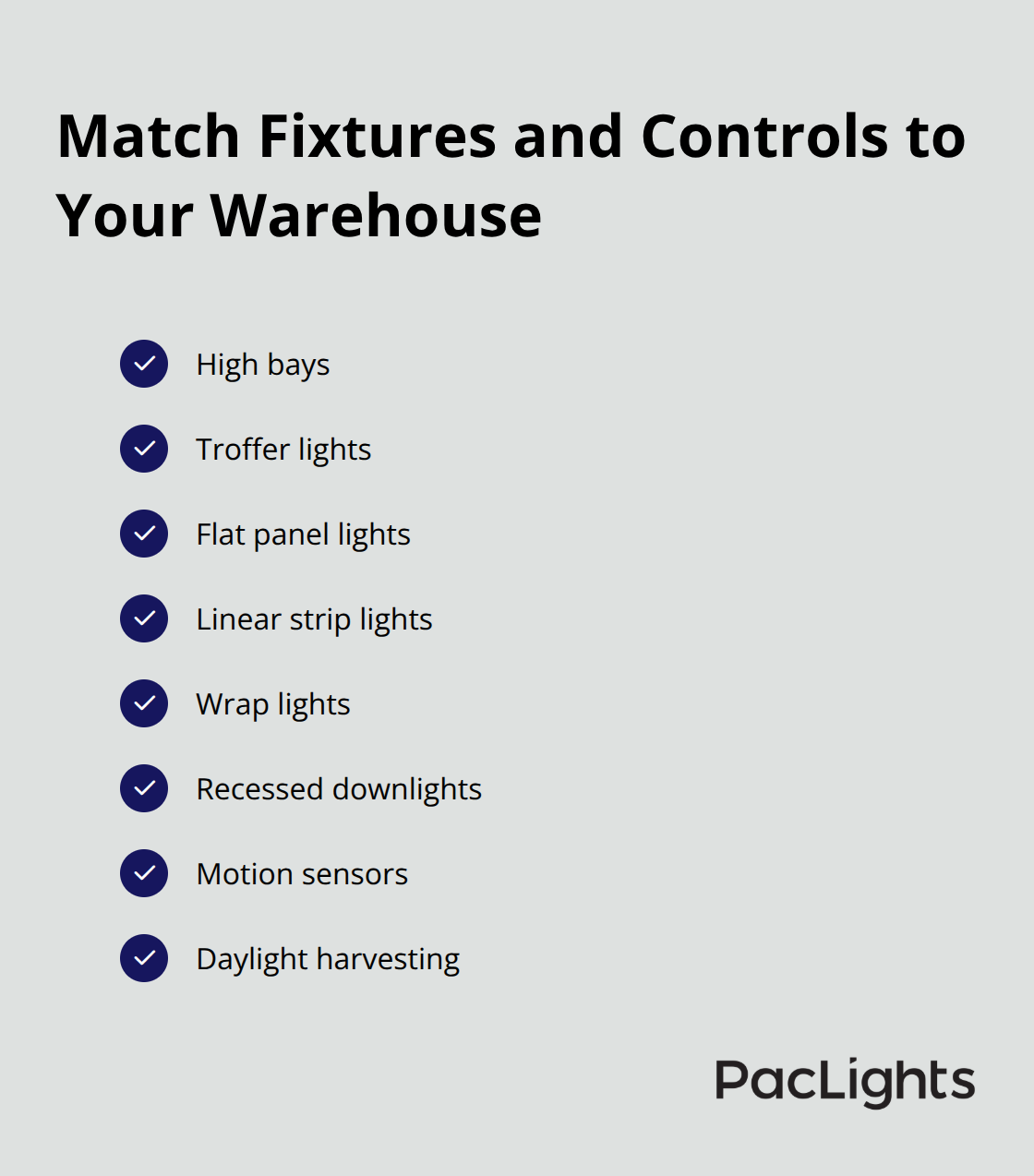
PacLights offers customizable options including high bays, troffer lights, flat panel lights, linear strip lights, wrap lights, and recessed downlights, along with advanced controls like motion sensors and daylight harvesting to match your specific layout and usage patterns.
Request free lighting layout designs from your supplier-this service is standard in the industry and prevents installation errors that waste thousands on fixtures placed in wrong locations. These designs show exactly where each fixture should mount and what output levels each zone requires.
Plan Installation with Minimal Downtime
Installation timing matters enormously; schedule retrofit work during slow operational periods, ideally across multiple short windows rather than one extended shutdown. Many warehouses complete retrofits in 2-week phases, replacing one section every month during lower inventory periods. This phased approach keeps operations running while crews install new wiring, fixtures, and control systems section by section.
Coordinate with your electrical contractor to understand whether your existing infrastructure supports direct LED installation or requires panel upgrades-older facilities sometimes need electrical work that adds 15 to 20 percent to project costs. Clarify this before signing contracts so no surprises emerge mid-project.
Final Thoughts
LED retrofits transform warehouse lighting energy savings into immediate financial gains that compound over decades. Your facility recovers the retrofit investment within 2 to 5 years through lower electricity bills, eliminated maintenance labor, and reduced cooling costs, then captures $15,000 to $16,000 annually in pure savings for the remaining 15 to 20 years of LED fixture operation. The environmental impact proves equally significant-switching from metal halide or high-pressure sodium systems cuts warehouse carbon emissions by 75 to 80 percent, preventing hundreds of tons of CO2 over a fixture’s lifespan while simultaneously lowering operational costs.
Your facility needs a professional assessment of current lighting conditions and a customized retrofit plan tailored to your specific warehouse layout and operations. We at PacLights provide free lighting layout designs and ROI assessments that show exactly what your facility can save with LED technology, including high bays, troffer lights, flat panel lights, and advanced controls like motion sensors and daylight harvesting. Visit PacLights to request your free assessment and learn the exact timeline and investment required for your warehouse.
Disclaimer: PacLights is not responsible for any actions taken based on the suggestions and information provided in this article, and readers should consult local building and electrical codes for proper guidance.